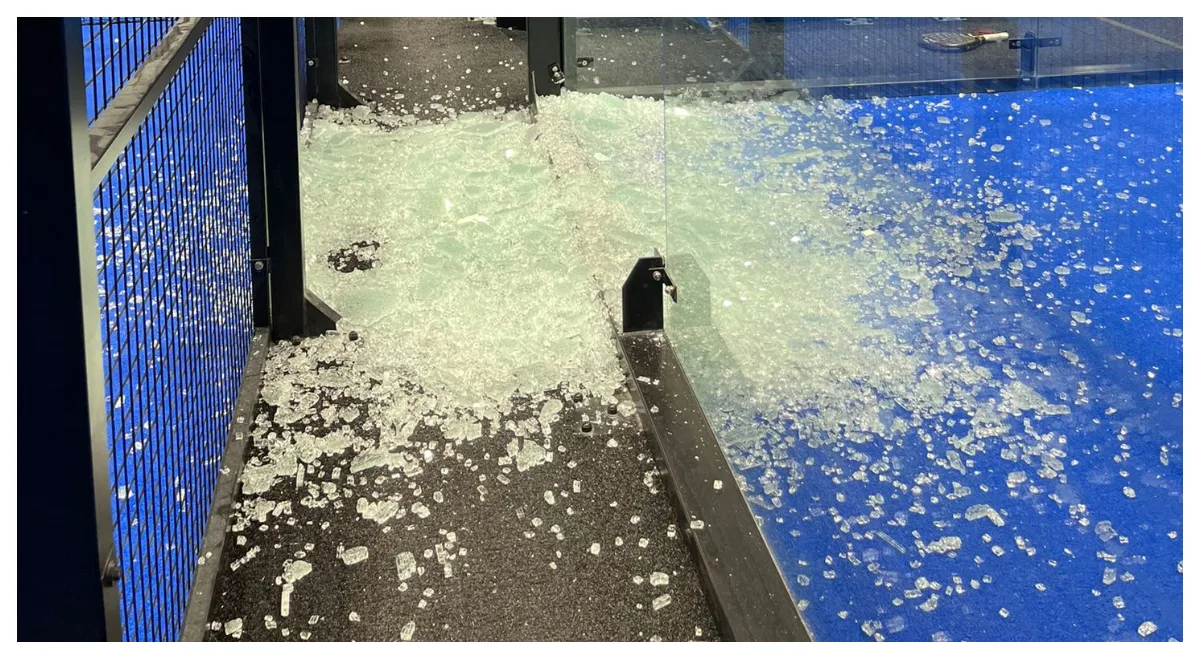
In late October 2025, a 28-year-old player from Mulhouse, Thomas, needed 21 stitches after a glass panel shattered during a padel match. A few days later, another player in the Alsace region had the same mishap, though with a less serious injury. Both accidents raise a pressing question about padel court safety.
READ ALSO: When a padel glass panel gives way: 21 stitches for Thomas, 28
To understand how such breakages happen, and above all how to prevent them, Padel Speak spoke to Martin Aguettaz, a padel court distributor based in Strasbourg.
His company, Padel 360, distributes courts for one of the biggest Spanish manufacturers and has already helped install more than 400 courts across several European countries. These courts, it should be said, fully comply with the specifications set out by the French Tennis Federation.
Two Main Causes of Breakage
Padel Speak: What can cause a glass panel to break on a padel court?
Martin Aguettaz: ‘There are generally two main causes. Either a player really hits the padel glass hard. These are toughened glass panels, but it’s still glass. We only fit 12-millimetre-thick glass across all our courts [Editor’s note: the other common standard is 10mm]. That’s the case on our panoramic courts as well as those with intermediate pillars between each panel.
You’d think courts with pillars are sturdier, but that’s not necessarily true. They use different anchoring methods, and each type of court has its own engineering calculations. We only sell courts whose calculations are compliant.’
Padel Speak: Are these engineering calculations linked to resistance tests?
Martin Aguettaz: ‘Yes. To sell courts, we’re required to have these calculations, based on resistance tests for wind, impact, weather (for outdoor courts) and temperature… The court is tested every which way to make sure it’s compliant and safe for players. But again, a glass panel is still glass. So it’s possible for it to break.’
Padel Speak: Can you go into detail on the two main causes of breakage?
Martin Aguettaz: ‘The first is when someone hits the glass quite hard, with a lot of speed and force. That can break it.
The second is what happened recently when Thomas went through the glass: on the CCTV footage, you can see he doesn’t hit the panel that hard. The most likely explanation is that the glass came into contact with the metal frame, another panel, or the floor slab. Glass is very strong, but as soon as it touches another element, there’s a risk it shatters. It’s a question of vibration, whether that’s metal against glass, glass against glass, or glass against the slab.’
Seals: Acrylic or Silicone
Padel Speak: How can this kind of risk be prevented?
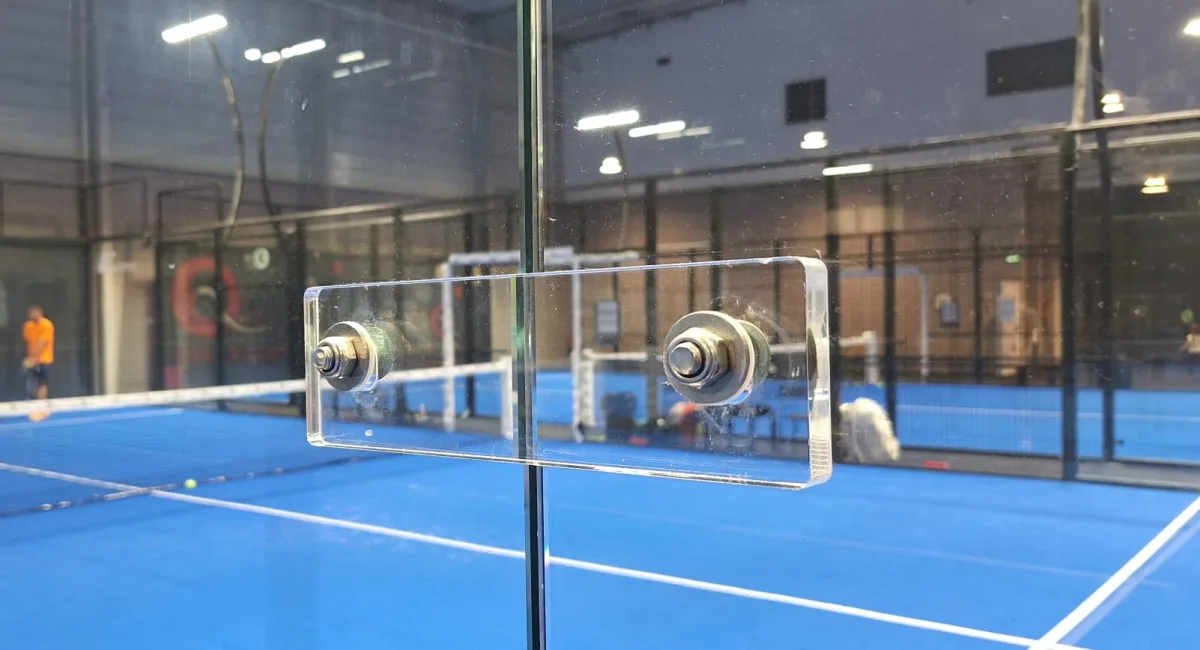
Martin Aguettaz: ‘Through prevention and regular maintenance. For example, as part of our maintenance service, we systematically check all the seals. There are two main types: silicone ones and acrylic ones, small acrylic rectangles fixed between each panel (see the photo at the top of the article). Acrylic seals need a lot more upkeep because they move more. They have to be replaced regularly and crack more easily.
Silicone seals perform better. They act as glue between each panel, so the panels move less vertically. When we install our courts, we add a dab of silicone at the top and bottom of each panel to create that glue effect and reduce movement. That technique has been around for about two years. Before that, it wasn’t done — there were only acrylic shims.’
Padel Speak: So there’s less risk with silicone seals…
Martin Aguettaz: ‘Yes, there’s less risk with a silicone seal than with the other types. Once courts are sold and installed, clients get caught up in day-to-day running and don’t have much time for maintenance. They don’t check every seal all the time. Since silicone seals need less upkeep, there’s generally less breakage overall. We still don’t have much hindsight, but we estimate a silicone seal lasts at least five years before it needs redoing.’
A Thermal Shock Can Shatter a Glass Panel
Padel Speak: So this is a solution you recommend to your clients?
Martin Aguettaz: ‘Yes, because it’s safer than all the other types of glass seal. Even on classic courts with pillars, where it isn’t strictly necessary, we still add a dab of silicone at the top and bottom to stop the glass moving vertically and to cut down on maintenance.’
Padel Speak: Besides impacts and vibrations, what else can break a glass panel?
Martin Aguettaz: ‘It’s rare, but there can be a manufacturing defect in the glass. We had a case near Grenoble, at Le Touvet, after a thermal shock on an outdoor court: it was around October–November, and a side panel shattered on its own, overnight. We raised it with the manufacturer, who mentioned a possible manufacturing defect. Normally, the panels withstand big temperature swings — the same glass is shipped to Sweden, where there’s snow. But sometimes a small flaw in the glass composition can cause it to break.’
Padel Speak: More broadly, what are the key maintenance points not to overlook?
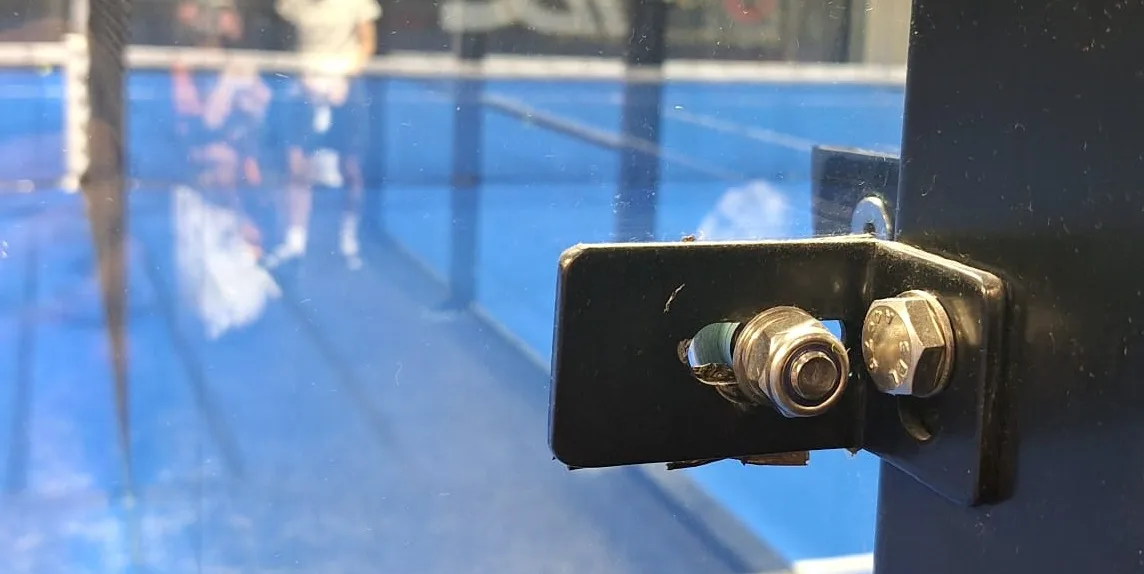
Martin Aguettaz: ‘We run three main checks: the turf, the fixings and the seals between the panels. For the turf, we use a machine that cleans it, decompacts the sand deep down and aerates the fibres. That means far less rapid wear. Then we recheck all the screws and bolts and tighten them. The third element is the seals between the panels. That’s very important for preventing breakage. And we also check the lighting.’